45 label the replication fork
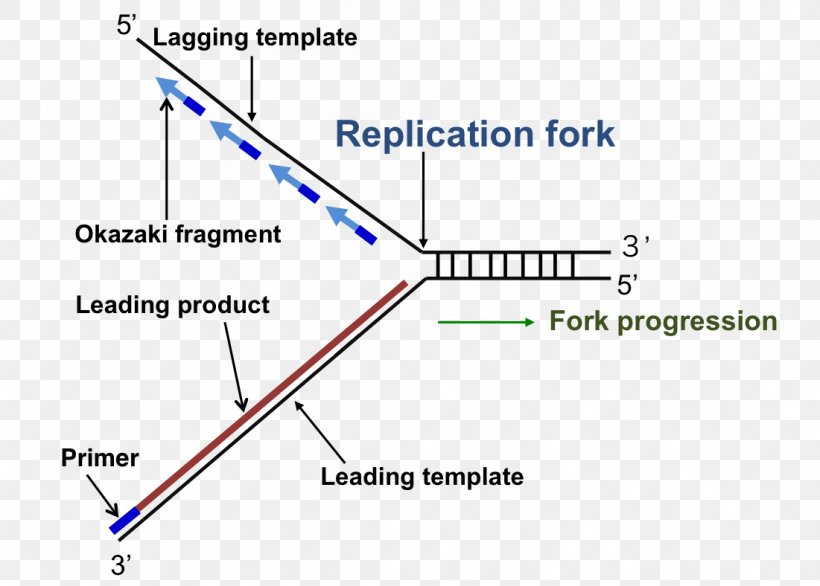
Replication Fork: Definition, Structure, Diagram, & Function The replication fork is a structure which is formed during the process of DNA replication. It is activated by helicases, which helps in breaking the hydrogen bonds, and holds the two strands of the helix. The resulting structure has two branching's which is known as prongs, where each one is made up of single strand of DNA. Okazaki fragments - Wikipedia The scientists found there was a discontinuous replication process by pulse-labeling DNA and observing changes that pointed to non-contiguous replication. Experiments ... these nicks prevent future DNA replication because the break causes the replication fork to collapse and causes double strand breaks in the actual DNA sequence. In time, these ...
DNA Replication Labeling Diagram | Quizlet DNA Replication Labeling 4.7 (24 reviews) Flashcards Learn Test Match Created by Kimberly_McGuffie Teacher Terms in this set (11) Term Single Stranded Binding Protein Definition Binds to and stabilizes single-stranded DNA until it can be used as a template. Location Term Helicase Definition
Label the replication fork
replication fork definition - Northwestern University replication fork. Definition: Search for: Glossary - word Glossary - def Textbooks Protocols Images Tools Forum PubMed Links Press Releases. Biology Glossary search by EverythingBio.com. The point at which the two strands of DNA are separated to allow replication of each strand. Micro 261 Exam 1- Chapter 4 Mastering Questions Flashcards Correctly label the items in this DNA replication fork diagram. Correctly label the steps/parts in this diagram representing the central dogma of molecular biology. The functional unit of genetic information is the gene In all cells, genes are composed of nucleic acids The flow of biological information begins with DNA replication DNA Replication Fork Overview & Function - Study.com The replication fork is formed by the action of the enzyme DNA helicase at the site of origin of replication. DNA helicase separates the strands of DNA, creating a replication bubble....
Label the replication fork. The Initiation and Completion of DNA Replication in Chromosomes Bacterial Chromosomes Have a Single Origin of DNA Replication. The genome of E. coli is contained in a single circular DNA molecule of 4.6 × 10 6 nucleotide pairs. DNA replication begins at a single origin of replication, and the two replication forks assembled there proceed (at approximately 500-1000 nucleotides per second) in opposite directions until they meet up roughly halfway around ... DNA Replication (With Diagram) | Molecular Biology Let us make an in-depth study of the DNA replication:- Learn about: 1. Basic Features of DNA Replication 2. Mechanism of DNA Replication 3. Meselson and Stahl Experiment 4. Enzymes of DNA Replication 5. Formation of Replication Forks & Replication Bubbles and Others. Central Dogma: Molecular mechanism of DNA replication (article) | Khan Academy As the DNA opens, two Y-shaped structures called replication forks are formed, together making up what's called a replication bubble. The replication forks will move in opposite directions as replication proceeds. Diagram based on similar illustration in Reece et al. ^2 2. How does replication actually get going at the forks? Draw a labeled diagram of a replicating fork. - Vedantu Hint: Replicating fork is the structure of the DNA double helix after the unzipping by ligase enzyme. This leads to two strands called leading and lagging strands. Complete answer: DNA replication is the process of duplication of DNA during cell division.
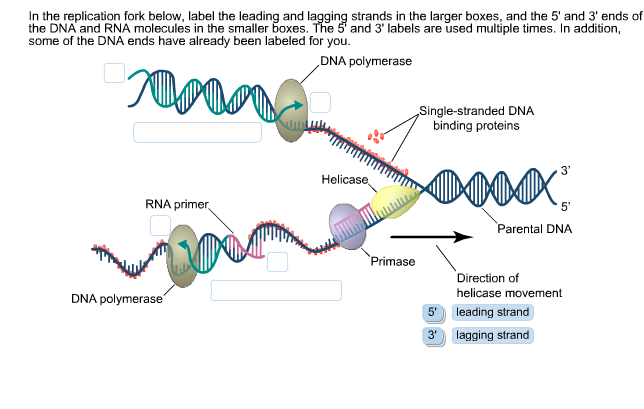
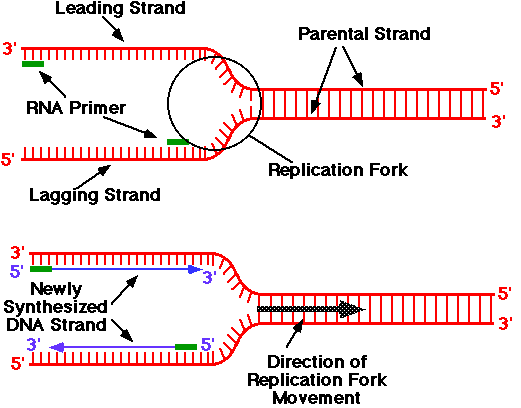
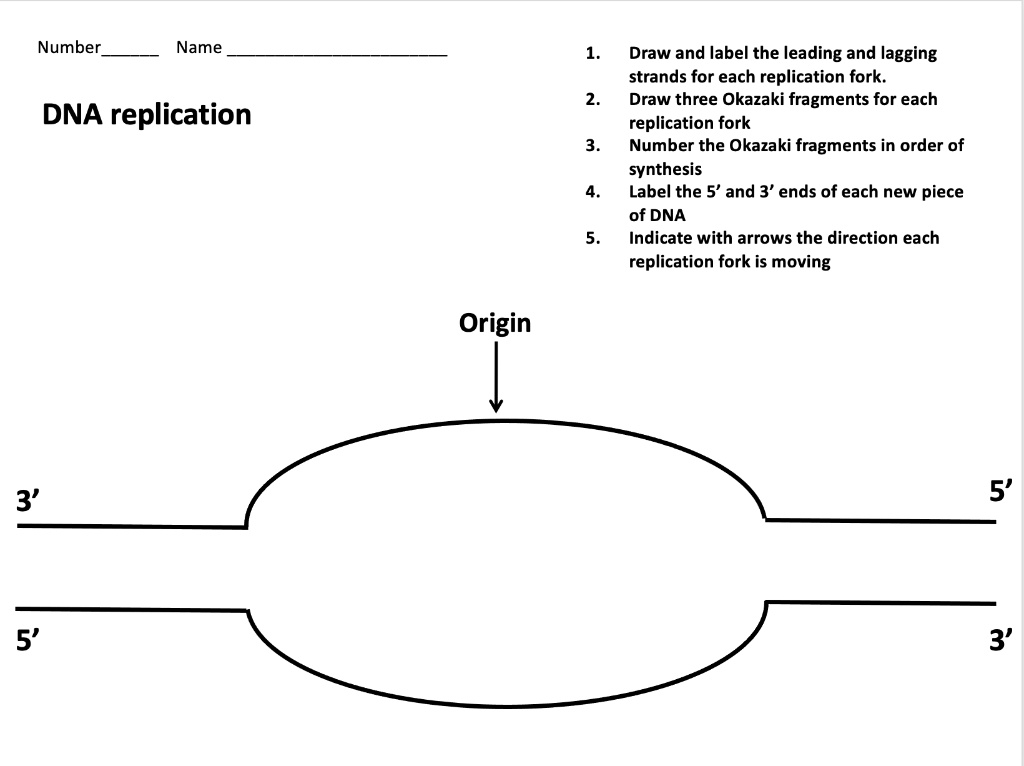
DNA Replication and Repair: DNA Replication | SparkNotes The replication origin forms a Y shape, and is called a replication fork. The replication fork moves down the DNA strand, usually from an internal location to the strand's end. The result is that every replication fork has a twin replication fork, moving in the opposite direction from that same internal location to the strand's opposite end. PDF Bio 102 Practice Problems Chromosomes and DNA Replication 1. Below is a replication fork (one side of an origin): a double-stranded DNA partially opened up to provide single-stranded regions where replication can occur. Draw and label the following: RNA primers (label 3′ and 5′ ends), leading-strand DNA polymerase and new DNA (label 3′ and 5′ ends and show direction of synthesis Replication Fork | Science Primer The replication fork is a region where a cell's DNA double helix has been unwound and separated to create an area where DNA polymerases and the other enzymes involved can use each strand as a template to synthesize a new double helix. An enzyme called a helicase catalyzes strand separation. Once the strands are separated, a group of proteins called helper proteins prevent the DNA Replication Fork: Definition & Overview - Study.com The replication fork is the area where the replication of DNA will actually take place. There are two strands of DNA that are exposed once the double helix is opened. One strand is referred to...
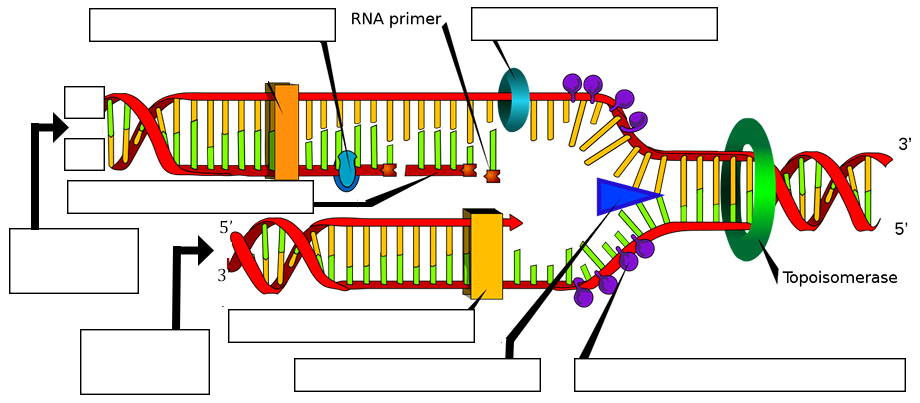
Replication Fork, Fork Protection Complex | Learn Science at Scitable Figure 1: Replication fork components. The RF is a multiprotein complex with helicase and DNA synthesis activities. It is called a fork because the structure resembles a two-pronged fork. The ... DNA Replication - Labeling worksheet with image - Name - Studocu DNA Replication - Labeling (with word bank) DNA polymerase 3' 5' DNA Ligase Okazaki fragment DNA Primase ... ____ DNA polymerase adds nucleotides in the 5' to 3' direction ____ Replication fork is formed ____ DNA polymerase attaches to the primer ____ Okazaki fragments are bound together by ligase ____ DNA helicase unwinds DNA. In the replication fork, label the leading and - Brainly.com In the replication fork, the leading strand moves in a 3' to 5' direction while the lagging strand moves in moves in 5' to 3' direction.. In Biology, replication fork refers to a method during which DNA double helix is synthesized. In this method, the double helix of DNA unfolds and splits into two separate wires. DNA polymerase and other enzymes get attached to different sites as a template ... Replication fork components | Learn Science at Scitable - Nature Replication fork components The RF is a multiprotein complex with helicase and DNA synthesis activities. It is called a fork because the structure resembles a two-pronged fork.
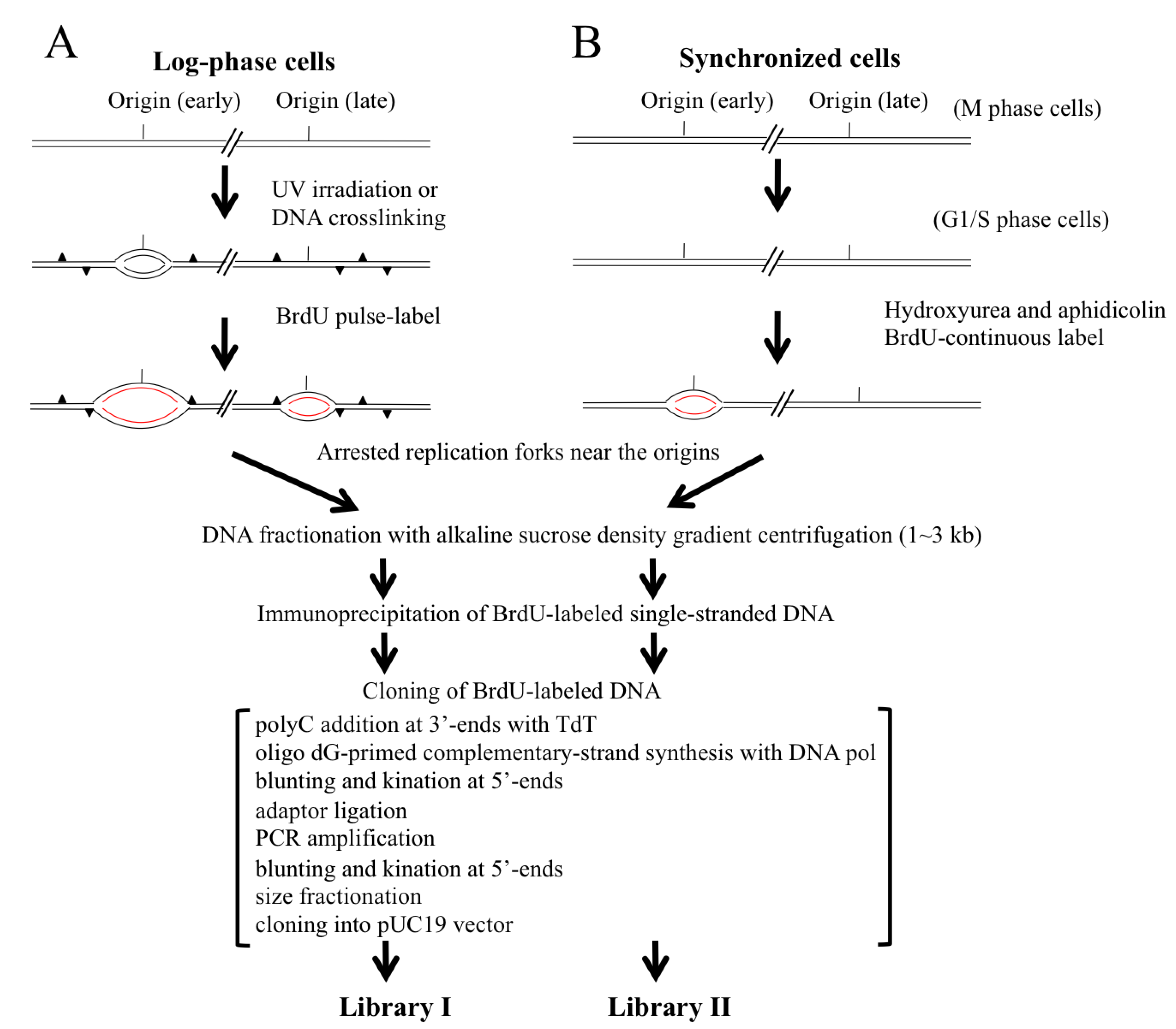
Genes | Free Full-Text | Trapping DNA Replication Origins ...
Copy of DNA Replication - Labeling 1 - Name - Studocu Copy of DNA Replication - Labeling 1 Is a Dna replication diagram worksheet University Clark University Course Developmental Biology (Biol 221) Academic year:2021/2022 Uploaded byAzanna Helpful? 10820 Comments Please sign inor registerto post comments. Students also viewed Multi Collinearity Week 12 Heteroskedasticity Auto Correlation
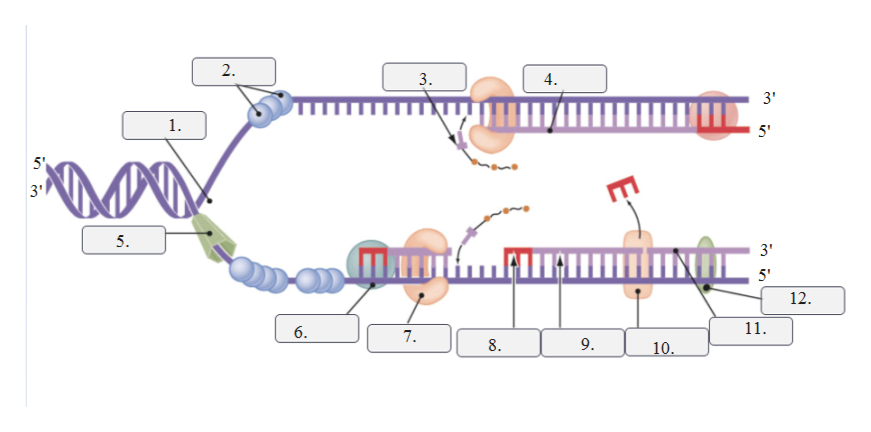
Answered: Label the figure to assess your… | bartleby
Solved Label the parts of the DNA replication fork. DNA - Chegg Label the parts of the DNA replication fork. DNA helicase Okazaki fragment Open beta clamp DNA ligase DNA polymerase III Leading strand Closed beta clamp RNA primer DNA primase Single-strand binding proteins DNA gyrase Clamp loader DNA polymerase I Parent DNA This problem has been solved!

What is DNA replication? – YourGenome
DNA Replication Fork Overview & Function - Study.com The replication fork is formed by the action of the enzyme DNA helicase at the site of origin of replication. DNA helicase separates the strands of DNA, creating a replication bubble....
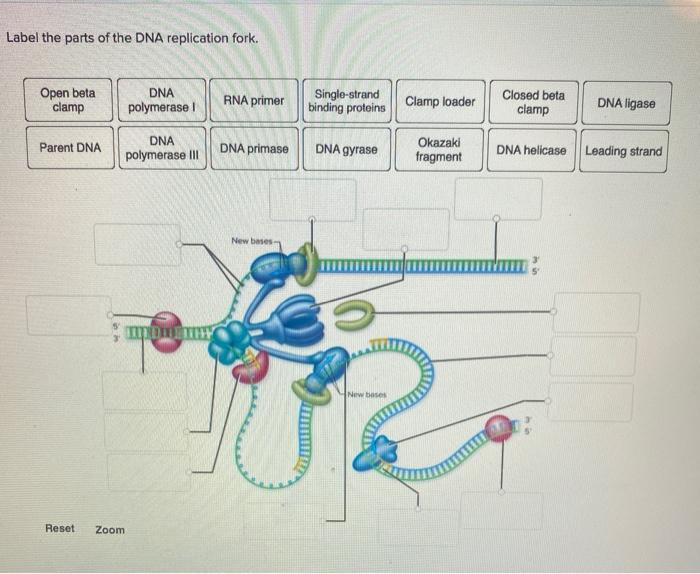
Solved Label the parts of the DNA replication fork. Open ...
Micro 261 Exam 1- Chapter 4 Mastering Questions Flashcards Correctly label the items in this DNA replication fork diagram. Correctly label the steps/parts in this diagram representing the central dogma of molecular biology. The functional unit of genetic information is the gene In all cells, genes are composed of nucleic acids The flow of biological information begins with DNA replication

Figure 3 | Single-Cell Analysis of Histone Acetylation ...
replication fork definition - Northwestern University replication fork. Definition: Search for: Glossary - word Glossary - def Textbooks Protocols Images Tools Forum PubMed Links Press Releases. Biology Glossary search by EverythingBio.com. The point at which the two strands of DNA are separated to allow replication of each strand.
5

DNA Replication (HL) | BioNinja
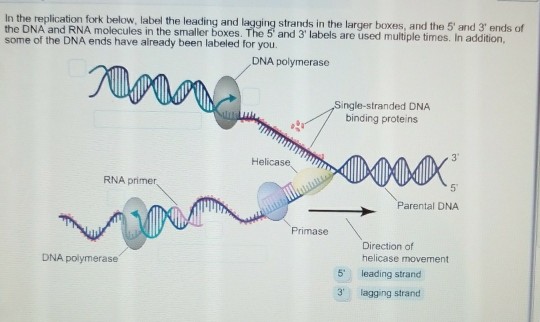
Solved In the replication fork below, label the leading and ...

Free DNA (replication fork) Icons, Symbols & Images | BioRender
SBI4U Unit 3 Test: Molecular Genetics
SBI4U Unit 3 Test: Molecular Genetics

Chapter 9: DNA Replication - Chemistry
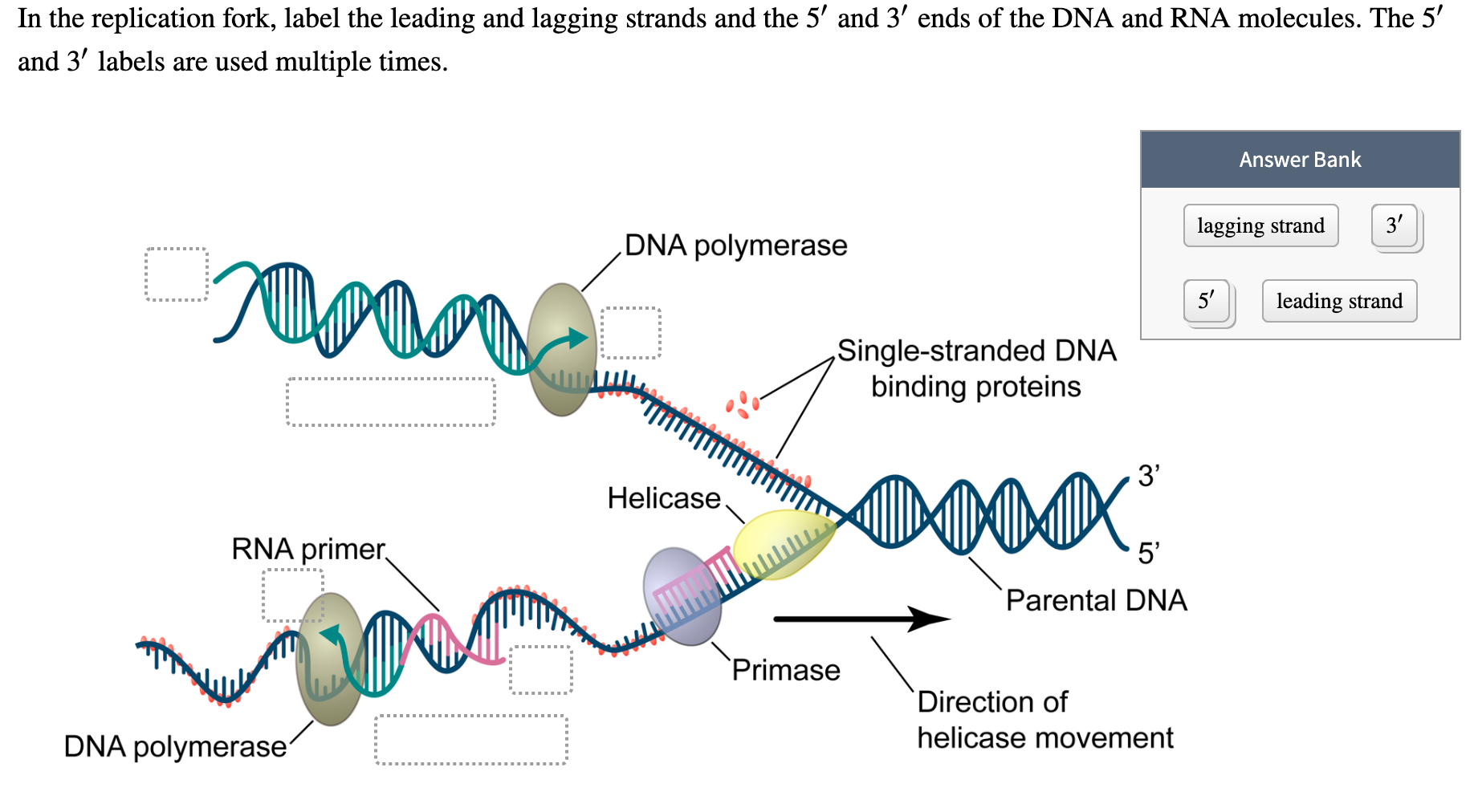
Solved In the replication fork, label the leading and | Chegg.com

Draw a labelled diagram of replicating fork.
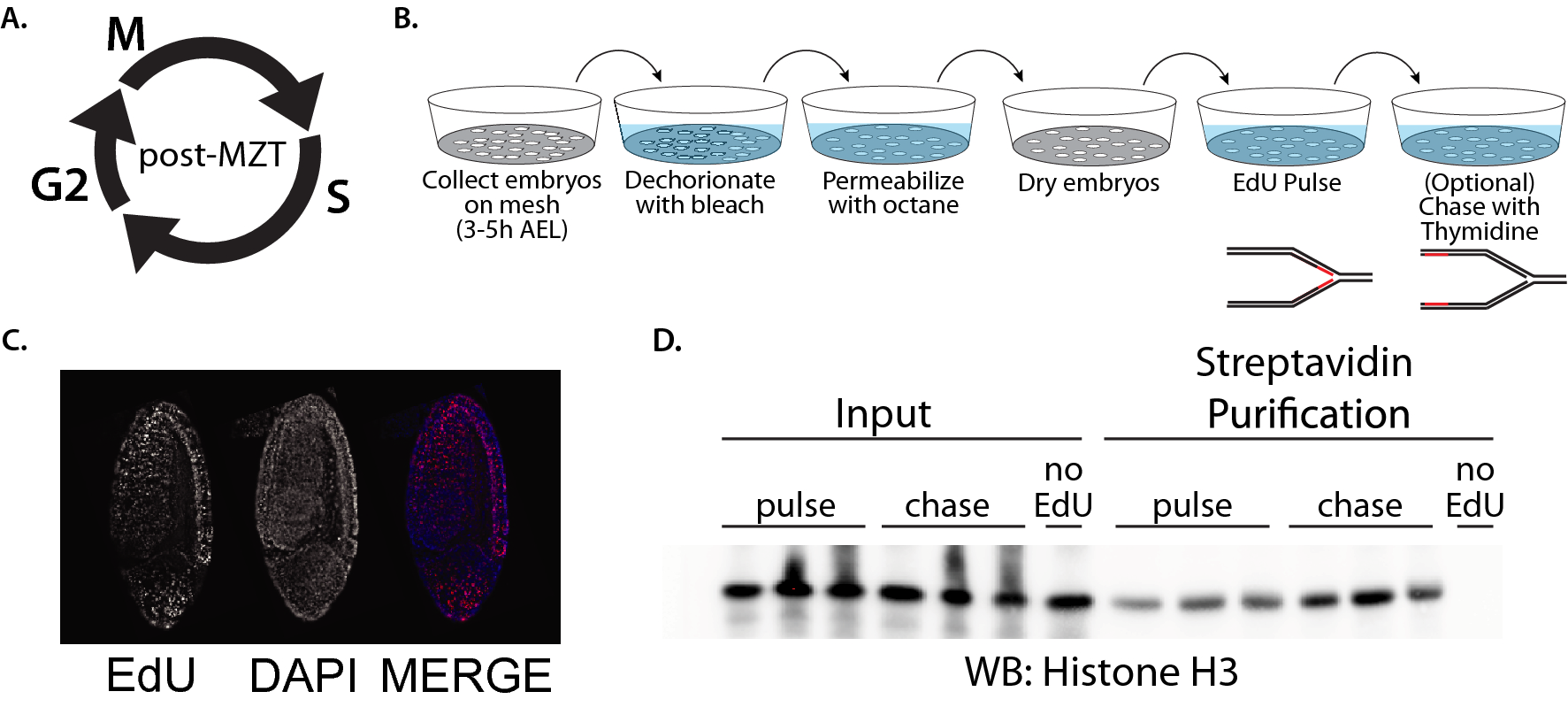
Identification of replication fork-associated proteins in ...
Bio 102 Practice Problems Chromosomes and DNA Replication

DNA Replication Labelling Diagram | Quizlet
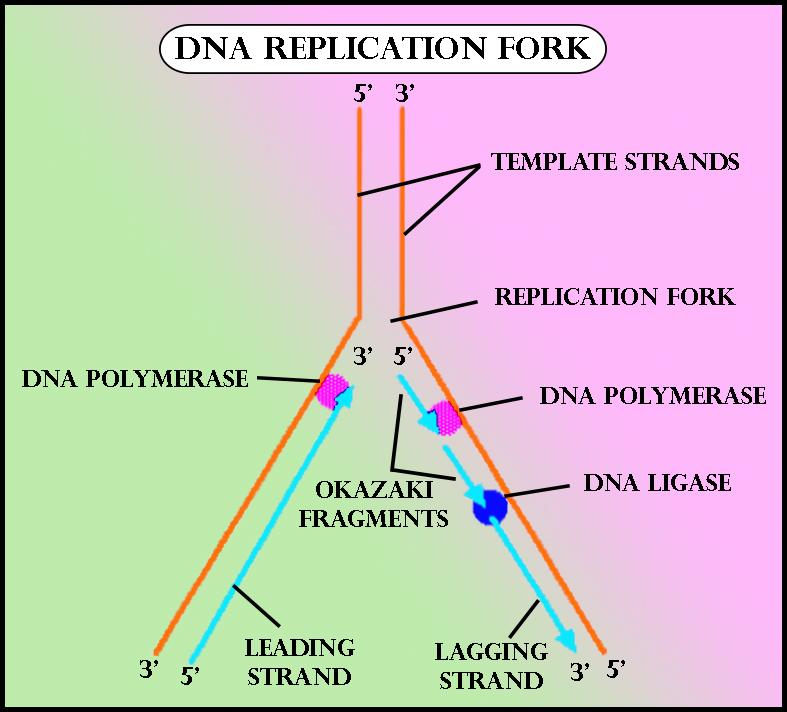
Draw a labeled diagram of a replicating fork.
Replication-Coupled Recruitment of Viral and Cellular Factors ...

Eukaryotic DNA replication - Wikipedia
DNA Replication Replication Fork Enzyme Triangle, PNG ...
DNA Replication
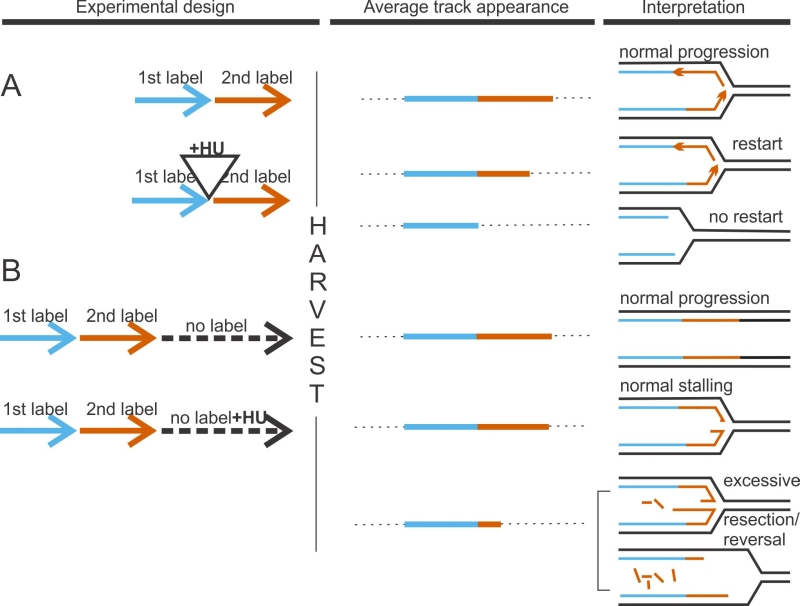
Figure 1 Replication stress-mediated fork remodeling

Draw a neat labelled sketch of a replicating fork of DNA.
Dna Replication Labeling Teaching Resources | TPT
Solved In the replication fork below, label the leading and ...

Frontiers | Mechanisms for Maintaining Eukaryotic Replisome ...

Label the figure below. Word bank: leading strand, lagging ...
Nucleic Acids and the Genetic Material Problem Set

Check: Draw a sketch of a molecule during replication. Make ...
Genome-wide analysis of DNA replication and DNA double-strand ...
SOLVED: Number Name Draw and label the leading and lagging ...
Single Molecular Resolution to Monitor DNA Replication Fork ...
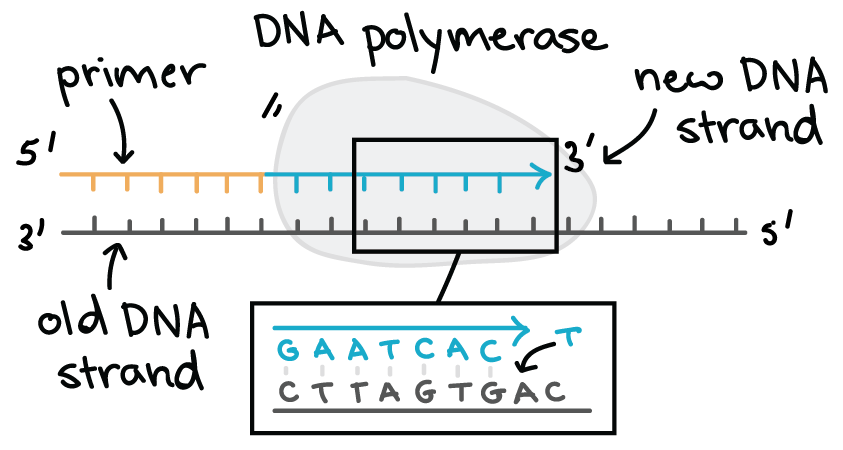
Molecular mechanism of DNA replication (article) | Khan Academy

Explain the mechanism of DNA repication with the help of a ...
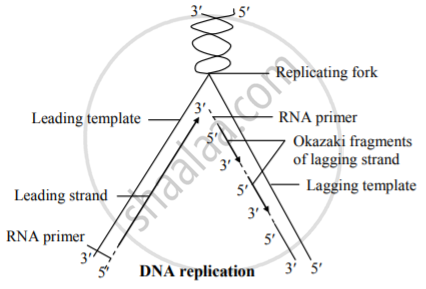
Draw neat and labelled diagram of Replication Fork. - Biology ...

Draw a DNA replication process in a eukaryotic cell. On your ...
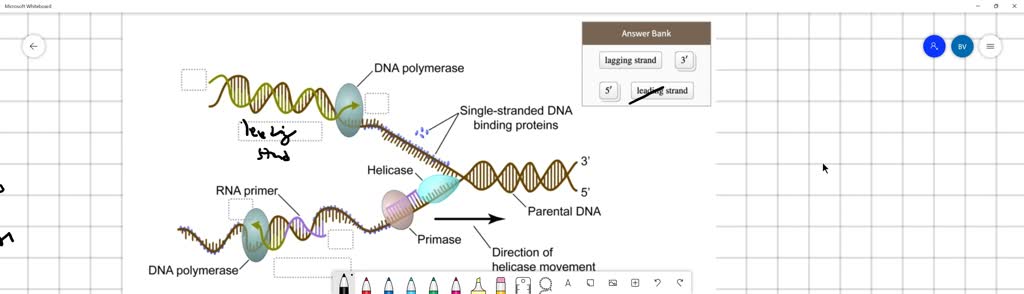
In the replication fork, label the leading and lagging strands and the 5' and 3' ends of the DNA and RNA molecules The 5' and 3' labels are used multiple times, Answer Bank, lagging strand, DNA ...

Micro 261 Exam 1- Chapter 4 Mastering Questions Flashcards ...

Lesson Explainer: DNA Replication | Nagwa
Untitled

Redraw the structure as a replicating fork and label the parts
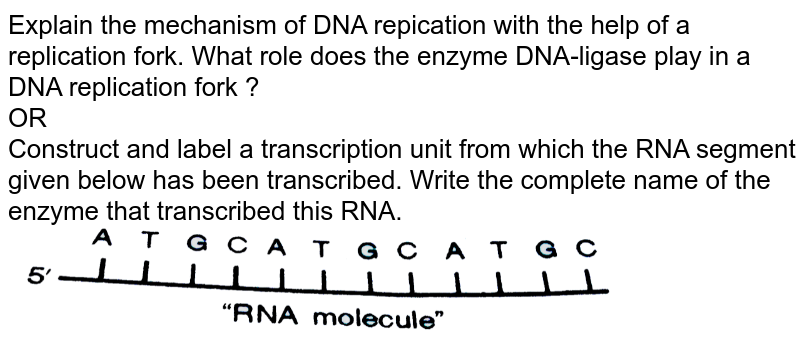
Construct and label a transcription unit from which the RNA ...

Module 8 DNA Replication Questions - BIOL DNA REPLICATION ...

Schematic of the experimental procedures used to identify ...

Post a Comment for "45 label the replication fork"